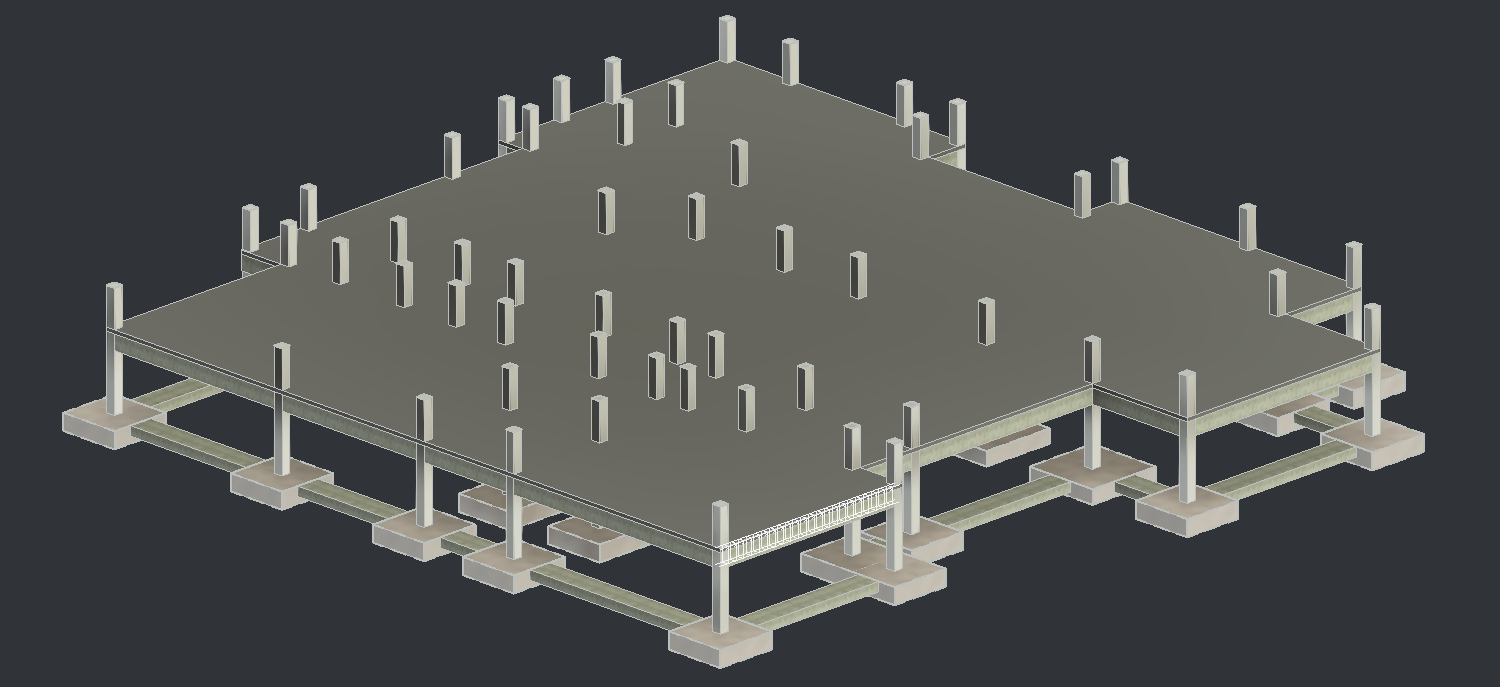
Foundations: The Invisible Backbone of Your Home That You Should Never Ignore
When people talk about a house or a building, the conversation almost always focuses on what is visible: the spacious rooms, the modern design, the roof shape, or the high-end finishing.
Very few people talk about the foundation.
Yet, the foundation is the single element that decides whether a building will stand the test of time or slowly develop ruinous problems. Simply put, a building is only as strong as the ground it stands on. Once construction is finished, the foundation disappears under the earth. But if it was badly designed, it will remind you of its existence through cracks, uneven floors, doors that no longer close properly, or even serious structural failure.
1. Why Foundations Are So Important
The job of a foundation is simple to understand physically, but complex to execute. It carries the massive weight of the entire building—walls, floors, furniture, and people—and transfers it safely into the soil.
What many people don’t realize is that soil is not uniform.
- Some land is strong and stable (rock or dense gravel).
- Other land is soft, wet, or expansive (clay or loose sand).
If the foundation does not match the specific type of soil it sits on, the building starts to suffer. From real construction experience, many "building problems" do not come from bad masonry or poor roofing. They come from foundations that were chosen without really understanding the ground beneath them.
2. The Ground Is Not Always Reliable
One of the biggest mistakes in construction is assumption. Two neighboring plots of land can behave very differently, even if they look identical on the surface.
Depending on the season and composition, some soils:
- Sink under heavy weight.
- Lose strength immediately when water enters them.
- Move or slide slowly over time.
This is why using the "standard" foundation depth and width everywhere is incredibly risky. A good foundation is not a guess—it is a specific engineering response to the soil.
3. Why a Soil Study (Geotechnical Report) Makes Sense
A soil study is not just paperwork; it answers one basic, critical question: "What kind of ground is this, and exactly how much weight can it safely support?"
With this specific data, engineers can:
- Choose the right type of foundation (strip footings, raft, or piles).
- Avoid uneven settlement (where one side sinks faster than the other).
- Reduce cracks and long-term structural damage.
- Design a safer and more durable building.
Buildings that start with a professional soil study usually remain stable for many years. Those that skip this step often face repairs—like underpinning—that cost ten times more than the study itself.
4. What Happens in Real Life
On active construction sites, the pattern is clear and undeniable:
- Buildings with proper soil studies age gracefully.
- Buildings without them often develop "mystery cracks" and foundation issues within the first few years.
Many serious problems could have been completely avoided with a simple soil investigation at the very beginning. These are not theories found in textbooks; they are painful lessons learned from real projects.
5. A Good Foundation Saves Money
Some owners view soil studies and specific foundation designs as "extra costs." In reality, they are smart investments.
A well-designed foundation:
- Protects the structural integrity of the entire building.
- Drastically reduces future maintenance and repair expenses.
- Increases the lifespan of the structure.
- Provides genuine peace of mind.
Spending a little more at the beginning often saves a fortune later.
Conclusion: Strong Buildings Start from the Ground Up
A building is not judged only by how it looks when the paint is fresh. It is judged by how it behaves after 5, 10, or 20 years.
That is why professionals always ask the hard questions first: What is the soil like? How will it behave under pressure?
The foundation is not just concrete poured into a trench. It is the base of your safety, comfort, and asset value. Choosing the right foundation, based on real soil conditions, is the most responsible decision you can make. In the end, every durable building shares the same secret: it was designed from the ground up, with the soil fully understood.